
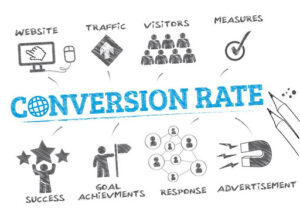
 A firm decides it wants more matters. The marketing conversation turns quickly to paid advertising. Increase the Google Ads budget. Launch a new campaign. Test a new platform.
More traffic feels like progress.
But there is a quieter, more important question that should come first: Is your landing page built to convert the traffic you already have?
Before you increase ad spend, it is worth examining whether your law firm landing page optimization strategy is strong enough to support that investment. Otherwise, you are not scaling performance. You are scaling inefficiency.
Traffic is Not the Problem
When a campaign underperforms, the instinct is often to blame traffic volume or lead quality. Sometimes that is accurate. Often, it is not.
In many estate planning firms, the breakdown happens after the click.
A prospective client searches for estate planning services. They click your ad. They arrive on a landing page. Within seconds, they decide whether to continue or leave.
If the page feels generic, cluttered, unclear, or misaligned with the ad they just clicked, the opportunity is lost.
Effective law firm landing page optimization begins with alignment. The message in the ad must match the message on the page. The promise must feel consistent. The next step must be obvious.
If that alignment is missing, increasing ad spend will only magnify the leakage.
A Landing Page is Not a Website Homepage
One of the most common structural mistakes is sending paid traffic to a general homepage.
A homepage introduces the firm. A landing page drives a specific action.
When someone clicks an ad for “Revocable Living Trust Planning,” they should not land on a broad overview of every service you provide. They should land on a focused page that speaks directly to that need.
Strong law firm landing page optimization requires:
- A clear headline that mirrors the search intent
- Brief, structured explanations of the service
- Evidence of credibility, such as testimonials or experience
- A visible, simple call to action
- Minimal distractions
The objective is not to educate exhaustively. It is to create clarity and confidence.
Clarity Outperforms Cleverness
Estate planning clients are not looking for marketing language. They are looking for reassurance and direction.
If your landing page uses vague claims such as “comprehensive solutions” or “personalized service” without context, it forces the visitor to interpret what that means.
Instead, answer the questions they are already asking:
- What exactly do you help with?
- Who is this service designed for?
- What happens if I schedule a consultation?
- What will this process feel like?
Law firm landing page optimization is often about subtraction. Remove unnecessary navigation. Eliminate competing calls to action. Simplify the layout. Make the next step unmistakable.
A single, well-defined objective tends to outperform a page trying to accomplish five things at once.
Speed and Structure Matter More Than Design Trends
Many firms focus heavily on aesthetics. Design matters, but structure matters more.
If your landing page loads slowly, is difficult to read on a mobile device, or buries the contact form below dense paragraphs of text, conversion rates will suffer regardless of visual polish.
Consider the experience from the client’s perspective. They may be reviewing your page between meetings or in the evening after work. The page must feel accessible, not demanding.
Effective law firm landing page optimization includes:
- Mobile-responsive design
- Fast load times
- Clear section breaks
- Short, scannable paragraphs
- Prominent contact options
These are operational decisions, not creative ones. And they directly influence marketing performance.
The Intake Experience is Part of the Conversion
Conversion does not end when someone fills out a form.
If your landing page generates inquiries but follow-up is inconsistent, slow, or unclear, your ad spend will not translate into signed clients.
Before increasing paid advertising, ask:
- How quickly are inquiries returned?
- Is there a defined intake script or structure?
- Are the next steps explained clearly?
- Is scheduling frictionless?
Law firm landing page optimization should be evaluated alongside intake systems. The transition from click to call to consultation must feel seamless.
Otherwise, you are paying to create opportunities that your internal process cannot fully capture.
Measure Before You Multiply
Paid advertising can be a powerful growth lever. But it works best when layered on top of an already functioning system.
Before increasing your ad budget, review:
- Landing page conversion rate
- Cost per consultation
- Consultation-to-engagement rate
- Follow-up consistency
If those numbers are unclear, that is the first issue to address.
Optimizing a landing page to improve conversion from 5 percent to 8 percent may produce a greater return than doubling your ad spend. Improvement at the system level compounds over time.
Growth Requires Discipline
There is nothing wrong with investing in paid advertising. In many markets, it is necessary to remain competitive.
But disciplined firms understand that growth is not driven by traffic alone. It is driven by structure.
Law firm landing page optimization is less about marketing tactics and more about intentional design. Each stage, from ad copy to intake call, should reinforce clarity and professionalism.
Before you increase your ad spend, ensure the foundation is ready. When the underlying system is strong, additional traffic becomes an asset rather than a gamble.
Firms that see consistent returns from paid advertising rarely rely on guesswork. If you are ready to approach your landing page and conversion strategy with greater structure, connect with the Academy’s Online Marketing Group to explore how our frameworks support intentional growth.
Komal Haider
Online Marketing Group (OMG) Program Manager
American Academy of Estate Planning Attorneys, Inc.
9444 Balboa Avenue, Suite 300
San Diego, California 92123
Phone: (800) 846-1555
www.aaepa.com

- Social Media for Attorneys: A Practical Strategy That Saves Time - October 1, 2026
- Why Most Law Firm Blogs Do Not Generate Leads - June 16, 2026
- How SEO and PPC Should Work Together for Law Firms - June 4, 2026

